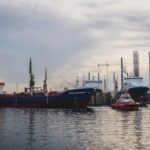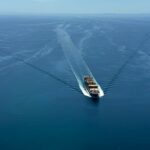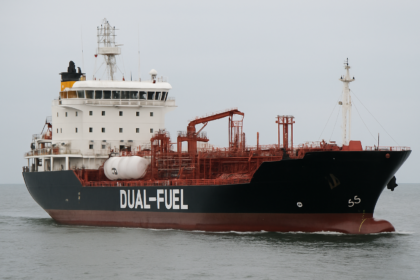
Wärtsilä’s onboard carbon capture and storage (OCCS) system is advancing towards commercial viability, with the Clipper Eris operating as a full-scale example. This ethylene carrier, retrofitted at Seatrium’s Singapore yard, has captured more than seventy percent of the carbon dioxide from its main engine exhaust since early 2025.
The system’s performance has shown the capability to capture around fifty tonnes of CO2 daily, with testing achieving highs of seventy-eight percent. This pilot project has received formal recognition under the EU Emissions Trading System and has gained in-principle acknowledgment from the International Maritime Organization (IMO). The groundwork for capturing and storing carbon on vessels is taking shape, although several substantial challenges remain.
Regulatory Framework Development
At the IMO’s Marine Environment Protection Committee (MEPC) meetings, particularly MEPC 83 in April 2025 and MEPC 84 in April 2026, discussions on the OCCS regulatory framework progressed significantly. The Committee agreed on a work plan aimed at developing guidance for accounting, verification, and certification of captured CO2 emissions, as part of the broader Net-Zero Framework. The ongoing regulatory dialogue includes considerations on whether captured CO2 should be regulated under MARPOL or the London Convention, an issue that necessitates further input.

Operational Challenges and Future Prospects
Despite the promising results from operational systems, there are ongoing challenges in making OCCS an industry standard. Issues regarding energy consumption, available ship space for storage, traceability of the captured CO2, and effective port reception are critical to operational feasibility. While Wärtsilä presents the cost of capturing CO2 at fifty-four to seventy-six US dollars per tonne, stakeholders are monitoring the net lifecycle reduction effects, factoring in the energy utilized by capture systems and transportation emissions.
Solvang is actively preparing for the future by ordering seven new very large gas carriers designed to be CCS-ready from inception, expected for delivery in 2026 and 2027. This proactive approach reflects a commitment to incorporating advanced carbon capture technologies as regulations become more defined and as the industry seeks cleaner operational methodologies.
Why It Matters
The evolution of onboard carbon capture technology represents a crucial step in the maritime industry’s transition towards reduced greenhouse gas emissions. As operators, charterers, and regulators work toward aligning carbon capture systems with existing maritime legislation, it is imperative to resolve energy and logistical challenges associated with implementation. Close attention to the evolving regulatory framework will be essential, particularly as the IMO aims for completion by 2028, affecting compliance strategies across various shipping segments. Monitoring developments in the effectiveness and acceptance of OCCS technology will be pivotal for the industry’s broader climate objectives.