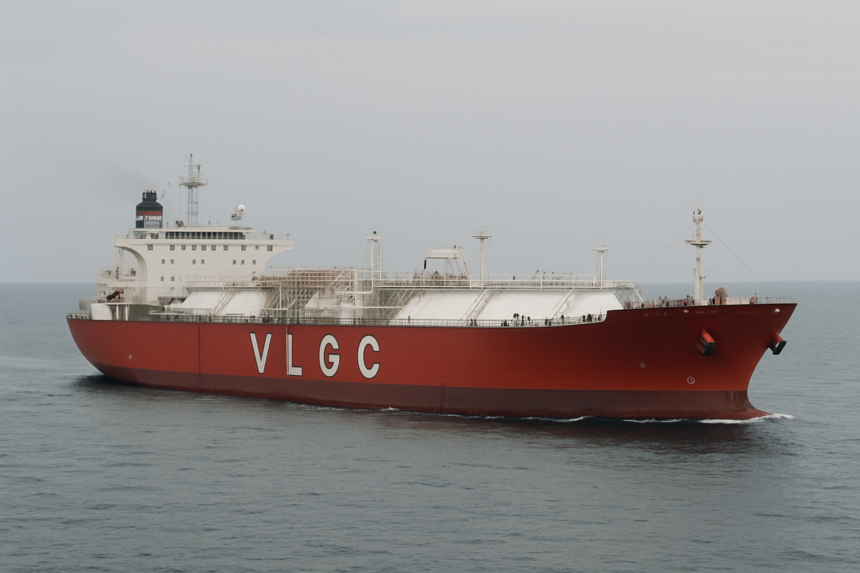
Energy trader BGN has made significant strides in expanding its liquefied petroleum gas (LPG) capabilities by signing a contract with HD Hyundai Heavy Industries for the construction of two new very large gas carriers (VLGCs). This latest order positions BGN at the forefront of a highly competitive LPG shipping market, as it seeks to enhance its operational capacity.

The New Order
The contract involves the procurement of two dual-fuel VLGCs, each boasting a capacity of 93,000 cubic meters. This addition will elevate BGN’s owned LPG fleet to a total of 19 vessels, reaffirming the company’s growth trajectory within the energy sector. Delivery of the new carriers is expected in 2029, aligning with BGN’s strategic focus on future-proofing its fleet through the adoption of advanced technology.
Market Context
The demand for LPG continues to rise globally, driven by its application as a cleaner alternative to traditional fossil fuels in various sectors. The new dual-fuel capabilities of these vessels will enable BGN to operate more flexibly, adapting to evolving environmental regulations and market demands for cleaner energy solutions. This development aligns with the wider industry trend towards adopting eco-friendly technologies and supports the International Maritime Organization’s (IMO) goals for reducing greenhouse gas emissions from shipping.

Strategic Implications
BGN’s investment in dual-fuel VLGCs represents a calculated shift towards enhancing its position in the global LPG market. By increasing its fleet size and adopting more sustainable vessel technologies, the company aims to secure a competitive edge as the industry navigates the complexities of energy transition and regulatory compliance. As global markets evolve, BGN’s strategy may serve as a blueprint for other operators looking to balance operational efficiency with environmental responsibility.
Behind the Headline
The acquisition of dual-fuel VLGCs is indicative of broader trends in the maritime shipping industry, where operators are increasingly investing in cleaner technologies to meet regulatory requirements and market expectations. For BGN, expanding its fleet not only enhances capacity but also aligns with a growing commitment to sustainability in energy transport. As the demand for LPG surges, the implementation of dual-fuel systems will likely provide operational flexibility and cost efficiencies, influencing charter rates and market dynamics in the coming years.