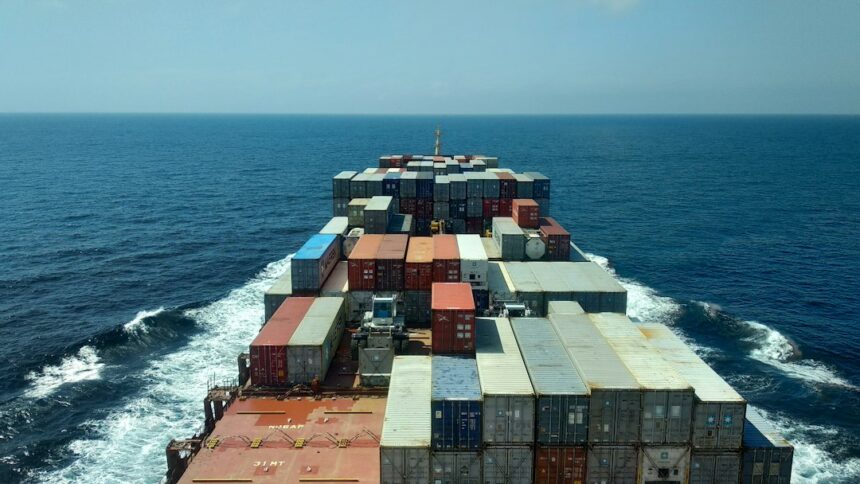
In a notable recovery, the weekly container ship capacity transiting the Suez Canal has averaged 753,000 TEU during the first two weeks of October, marking an increase to over 50% of pre-disruption levels. This resurgence follows significant changes in shipping routes after Houthi attacks in the Red Sea prompted many container lines to divert vessels toward the Cape of Good Hope.
According to Clarksons Research, prior to disturbances initiated by the Houthi forces, container ship capacity through the canal was approximately 1,457,000 TEU. Following the onset of unrest in November 2023, which included threats against Israeli vessels that escalated into broader targeting of commercial ships, weekly capacity at its lowest point fell to just 330,000 TEU by the last week of 2023.
Recent Developments
Since July 2026, with the Gemini Alliance, consisting of Maersk and Hapag-Lloyd, announcing the resumption of their AE15/SE3 Asia–Mediterranean service through the canal, a return to traditional routing has accelerated. In total, 16 services have strategically altered their routes back to the Suez Canal since early July, culminating in the first two weeks of October where 36% of total container ship capacity—previously routed through either the canal or the Cape—now transited the canal. This is a significant upturn from an average of 8% between 2024 and mid-2026.

| Container Ship Capacity | |
|---|---|
| Pre-Disruption Average | 1,457k TEU |
| Lowest Point (Dec 2023) | 330k TEU |
| Current Average (Oct 2026) | 753k TEU |
While there has been an uptick in transits, it is worth noting that the capacity transiting the canal is still a far cry from the levels observed before the Houthi attacks, with only 80% of the normal operational levels reached before the end of 2023.
Market Implications
Shipping analysis indicates that rerouting around the Suez Canal played a role in bolstering global container ship demand by an estimated 10%. However, as many services reestablish routes through the canal, concerns about port congestion in Asia may influence future supply and demand dynamics. Notably, while southbound demand initially drove increases, the first weeks of October saw northbound capacity rise to 81% of southbound levels, a sign of market recovery.
Behind the Headline
The current state of the Suez Canal signals a recovery period for shipping operations in response to earlier disruptions caused by geopolitical events. The gradual return of services to the canal not only reflects improving safety perceptions but also realigns the shipping market, which had previously adapted to longer, alternate routes. However, shifts in global routing must now contend with operational challenges, including port congestion in Asia, which could impact turnaround times and profitability for shipping lines. Operators should monitor these developments closely as the market adjusts to the new equilibrium.