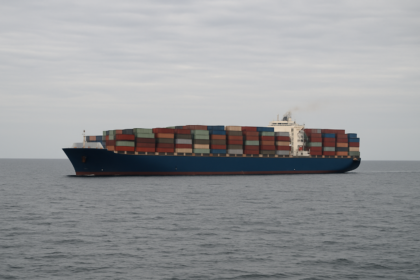
Russia’s Arctic shipping ambitions are set to gain significant momentum, with forecasts indicating that cargo transits along the Northern Sea Route (NSR) will exceed 7 million tonnes in 2026, nearly doubling the volume from the previous year. Vladimir Panov, head of the Arctic Directorate at state nuclear corporation Rosatom, announced this projection on October 27.
Transit Growth and Strategic Significance
In addition to the surge in transit cargo, the total cargo traffic along the NSR is anticipated to surpass 40 million tonnes, marking a record for the route. Panov highlighted that the NSR possesses key competitive advantages in terms of efficiency and security, notably, that this summer-fall route between Asia and Europe is approximately 30% shorter than the conventional passage through the Suez Canal.
The anticipated growth is indicative of a broader trend, as businesses increasingly opt for the NSR, signified by the volume of cargo transiting the region. Although transit cargo remains a small fraction of overall traffic, its rapid increase is noteworthy.

Tracking Current Traffic Trends
According to research from Norway’s Centre for High North Logistics (CHNL), as of September 30, 104 confirmed transits had already been recorded, surpassing the total of 103 transits logged during the entire 2025 navigation season. Cargo volume carried during this timeframe stood at approximately 3.7 million tonnes, compared to 3.2 million tonnes throughout 2025. If current voyages conclude successfully, CHNL estimates that the season could see around 150 transits and potentially exceed 4.5 million tonnes of cargo.
Oil shipments are playing a pivotal role in this increase. In August, a notable operation yielded a convoy of at least 15 vessels, including eight oil tankers, which navigated north of the Severnaya Zemlya archipelago, a tactic employed to circumvent difficult ice conditions in the Vilkitsky Strait. This detour involved a longer, nearly 1,000-kilometer route compared to traditional pathways, yet it underscored the adaptability of shipping operators in challenging conditions.
Market Outlook
Historically, cargo traffic through the NSR has grown from about 3.7 million tonnes in 2014 to over 37 million tonnes in each of the last two years, largely driven by exports of Russian oil, liquefied natural gas (LNG), and other resources. However, these volumes have consistently fallen short of the Kremlin’s aspirational goals, including a projection of 80 million tonnes by 2024, followed by revised forecasts of 70 to 100 million tonnes by 2030.
Despite significant advancements, the impact of Western sanctions has clouded the timeline for major Arctic oil and gas developments, which has slowed the anticipated growth of cargo volumes. Nevertheless, the recent uptick in remaining focused on redirecting trade towards Asian markets illustrates that Russia is still committed to optimizing the NSR’s operational capability.
Behind the Headline
The operational landscape along the Northern Sea Route reflects a strategic shift in how Russian cargo is transported, particularly as geopolitical dynamics evolve. As shipping firms increasingly navigate the complexities of sanctions, the reliance on shadow fleet vessels could become more pronounced. The need for an efficient Arctic corridor provides both a strategic opportunity and a logistical challenge, particularly as production from hydrocarbon projects like Rosneft’s Vostok Oil develops. Observers will closely monitor how these factors influence shipping routes and cargo flows in the coming years.